project_
Petição AI
Petição AI adapts the Hermes assistant to legal work: documents, conversations, and instructions stay tied to the same case through delivery of the Word and PDF draft. the output preserves the firm’s template and always remains subject to professional review; the system neither signs nor files the petition.
inside the product_
how the system works
from what people experience to what keeps the product running
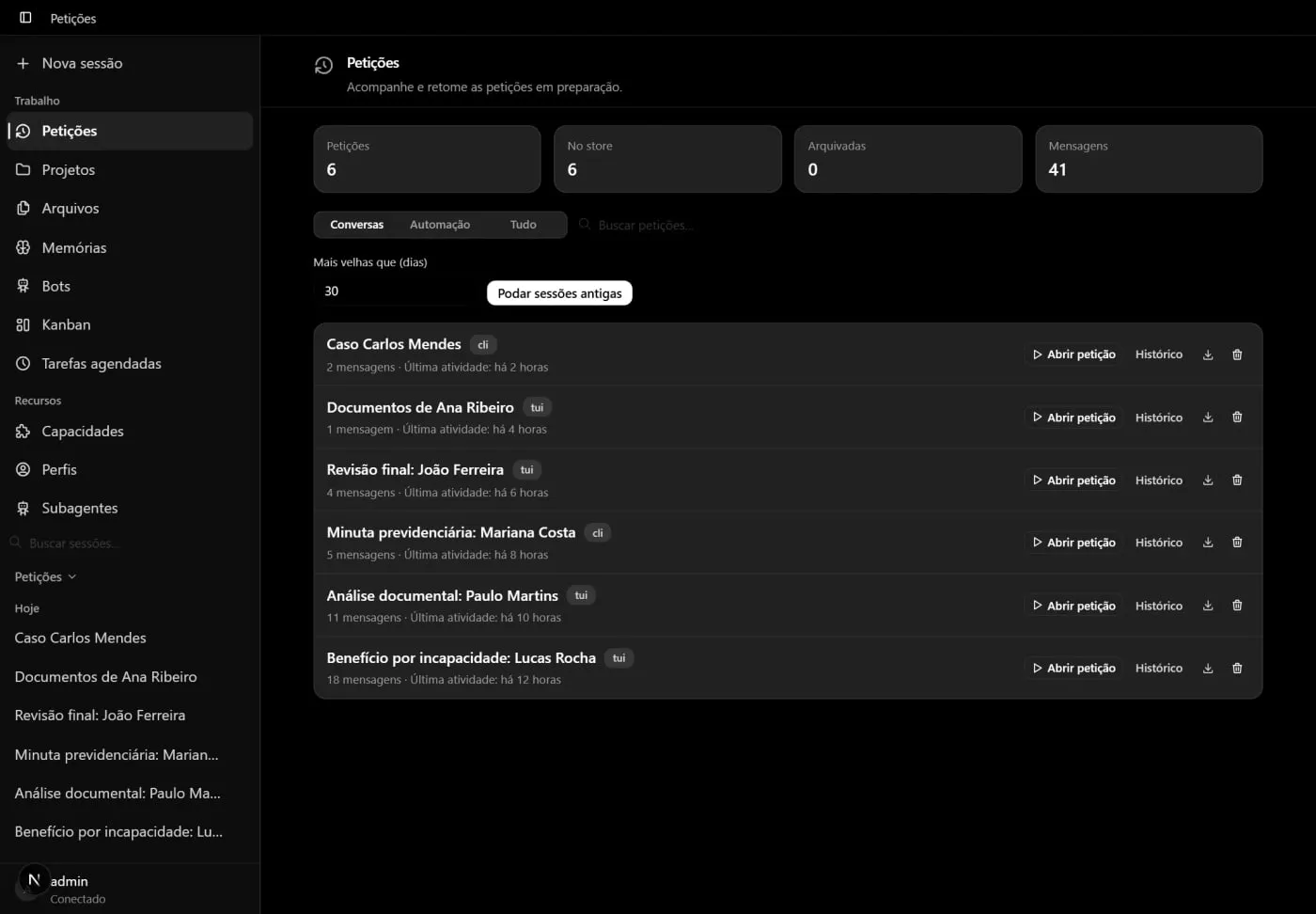
the user attaches the case documents and works with Hermes in the same space. the petition, history, and files remain associated when work resumes after an interruption.
Hermes organizes the facts, identifies missing information, and asks for confirmation instead of filling gaps on its own. the document remains a draft for the responsible lawyer to review.
before delivery, every material paragraph is checked against the case sources. unsupported claims are blocked, and an independent review looks for conflicts among documents, instructions, and the generated text.
the editable file preserves the firm’s approved letterhead, typography, and pagination. the same version is also delivered as a PDF, and later corrections do not erase the reviewed version.
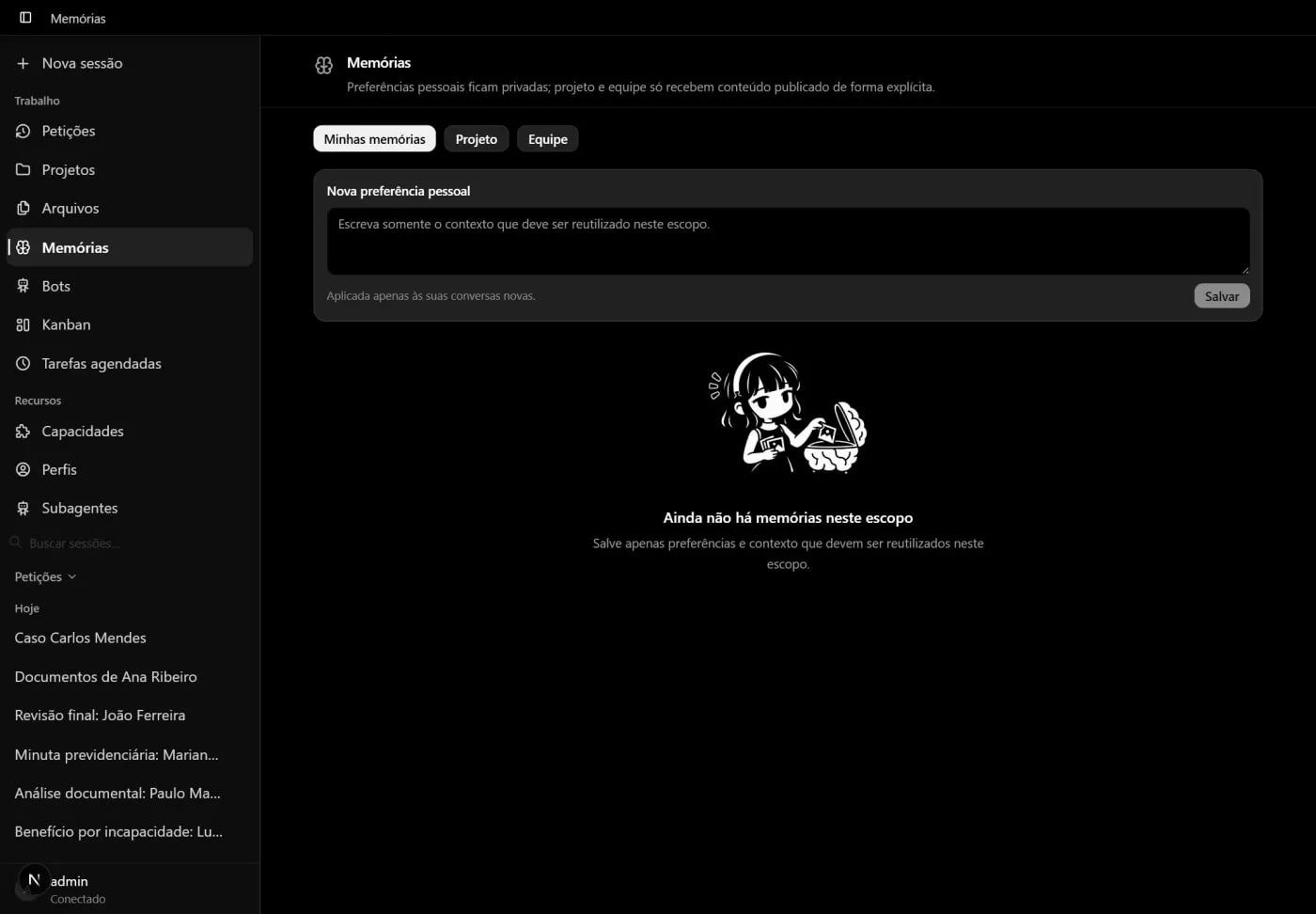
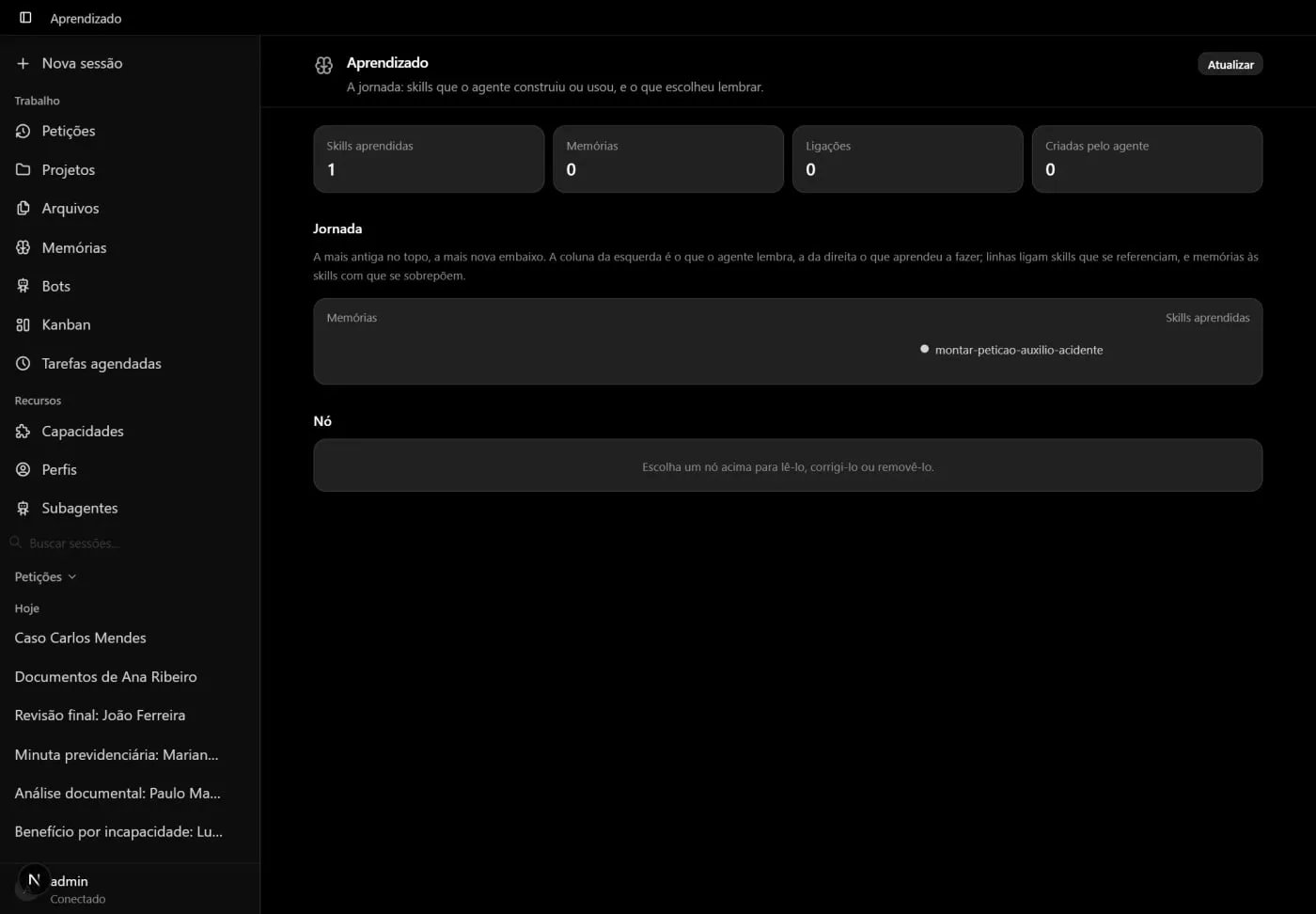
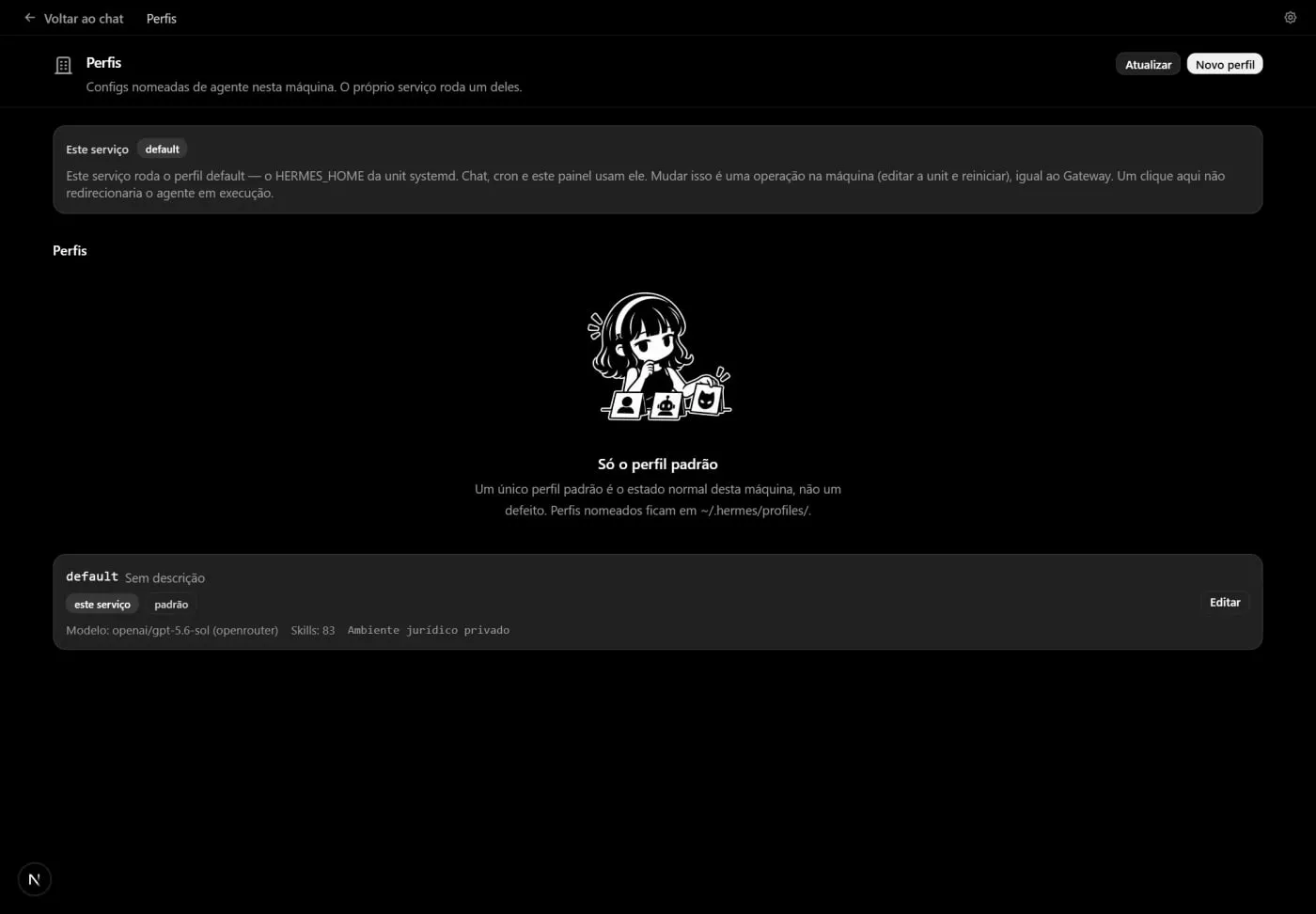
profiles, memories, and projects keep personal, case, and team scopes separate. the legal workflow receives only the context authorized for that work.
product in use_
project screens
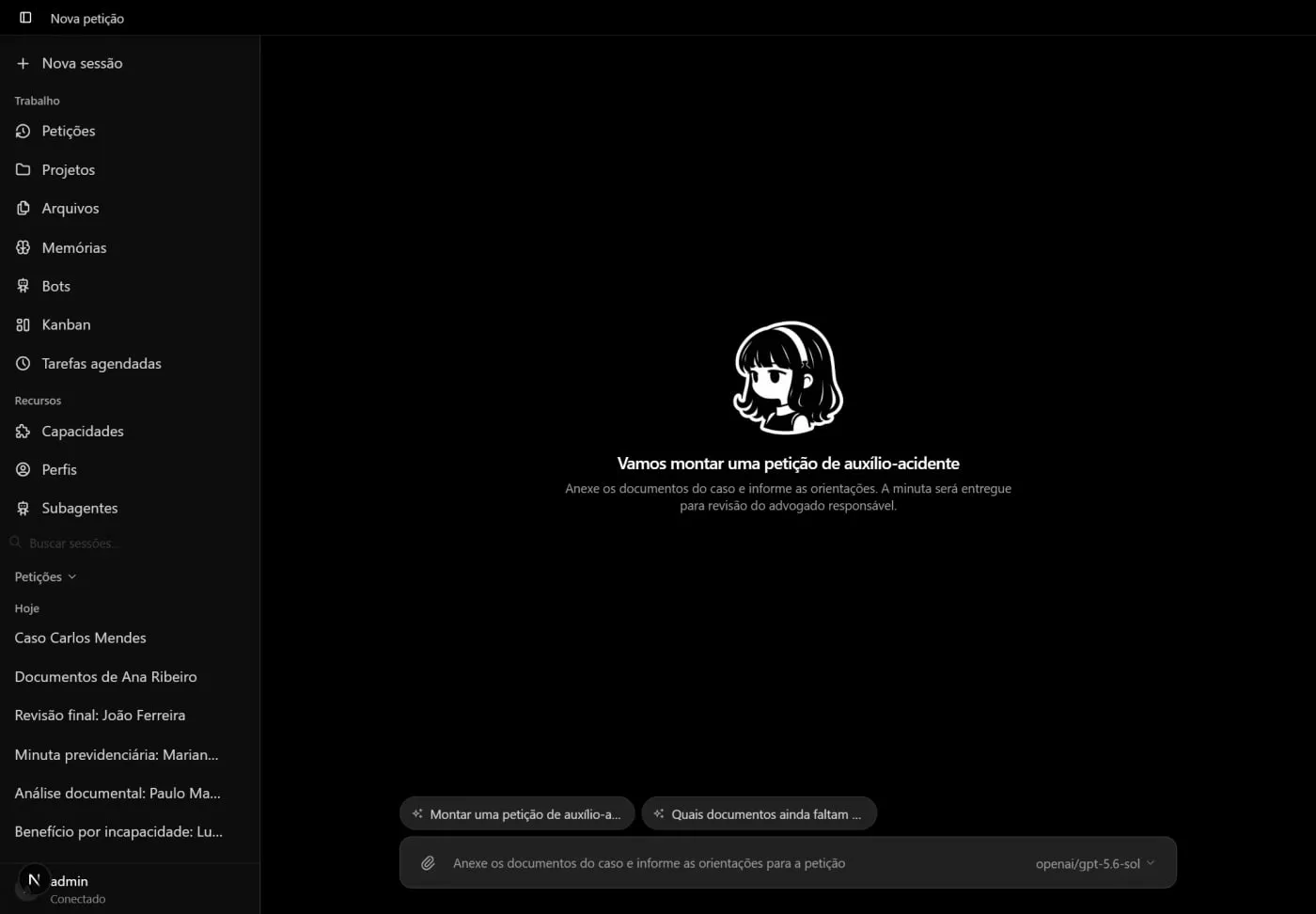
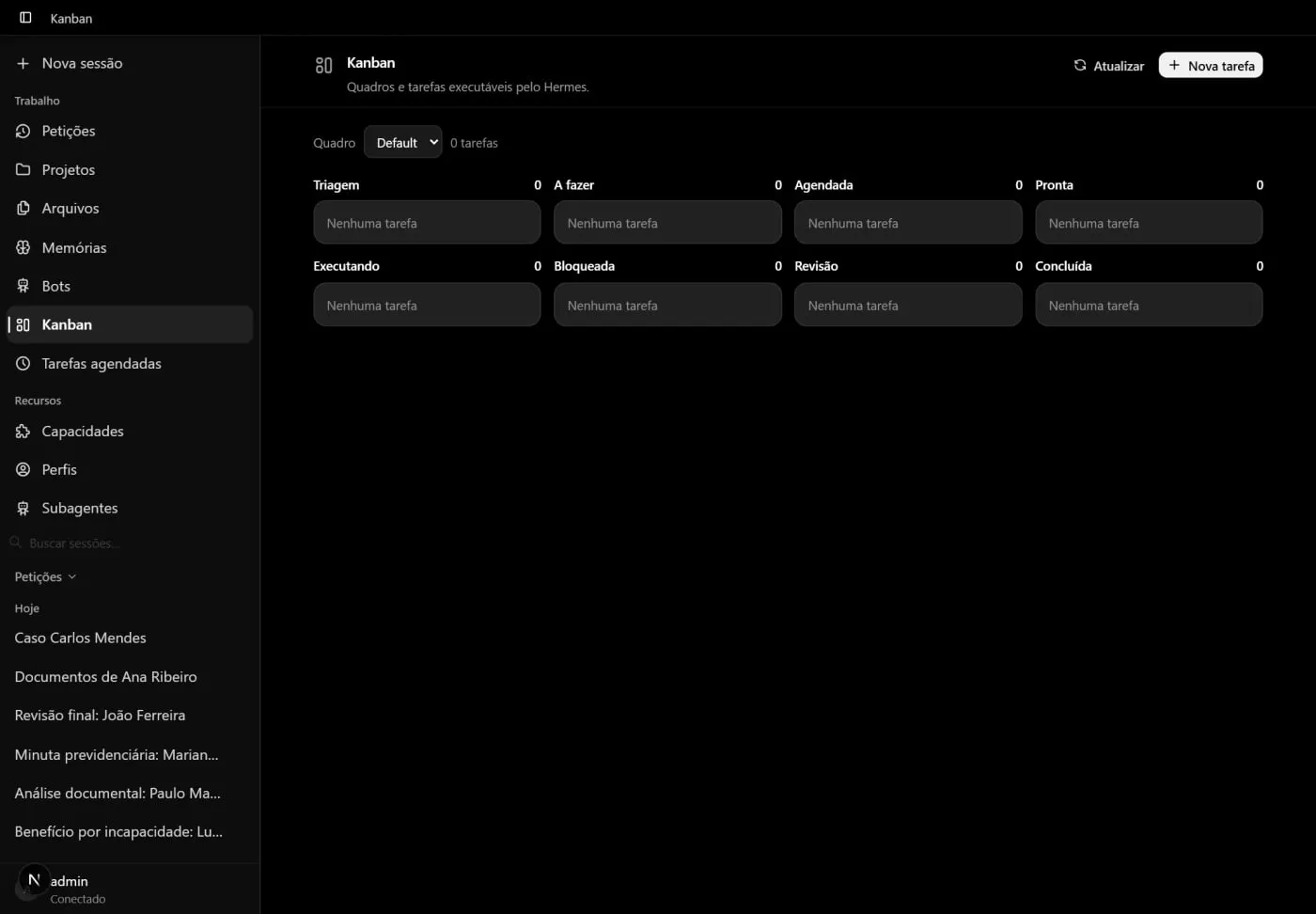
why it was built this way_
important decisions
the choices that shaped the experience, operations, and product boundaries.
use an agent without transferring legal judgment
Hermes organizes documents and prepares the draft, but it does not replace the lawyer: open questions return for confirmation, and every document is marked for professional review.
tie every claim back to the case material
the review does more than check whether the text sounds right. every material passage must be supported by the documents and instructions before delivery.
deliver a file the firm can continue editing
the output must preserve the Word template used in daily work, including letterhead, styles, breaks, and pagination, while also producing a PDF for review.
preserve work through interruptions
conversations, attachments, and versions must return after a disconnect, reload, or deployment without duplicating requests or requiring another generation.
separate contexts without losing continuity
profiles, memories, and projects make personal, case, and team scopes explicit. the legal workflow receives only the context authorized for that work.
see the other works
