project_
AgroTax
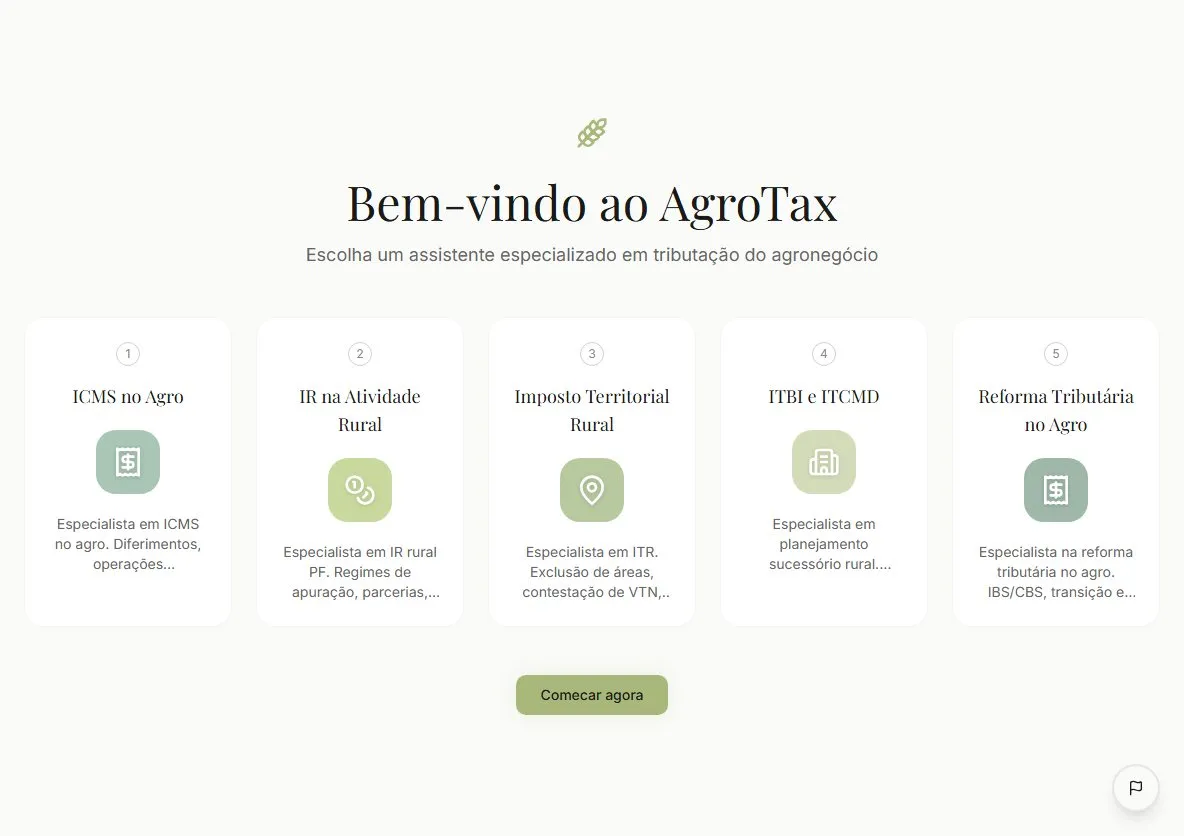
lawyers, accountants, and consultants ask about Brazilian rural income and property taxes, state taxes, and tax reform. each answer cites the relevant passage from a specialist’s work.
inside the product_
how the system works
from what people experience to what keeps the product running
the search finds the passages in the expert’s work that best match the question. the assistant receives those sources with the prompt instead of answering from memory alone.
uploaded documents can also be analyzed. scanned PDFs are read as images, and their content is checked for hidden instructions before it reaches the assistant.
each client can access only their own data. usage is limited per person, and answers stream as they are produced instead of leaving the screen idle.
the application runs in São Paulo, close to its Brazilian users, so each message can begin processing without an extra round trip to the United States.
product in use_
project screens

why it was built this way_
important decisions
the choices that shaped the experience, operations, and product boundaries.
preserve the meaning of the legal text
a legal rule cannot be split wherever it happens to fit. the system preserves the structure of the law so each passage reaches the assistant with the context it needs.
read images only when needed
a scanned PDF needs slower image-based reading. the system detects that case automatically while keeping searchable documents on the faster path.
Switching experts without repeating the case
when someone switches specialists during a conversation, the next assistant receives the context without making them explain the case again.
protect data and documents
the database blocks access to another client’s data, usage is limited per account, and every file is checked before it reaches the assistant. payment confirmation creates the account automatically.
see the other works
